The Ghost Story Built on Historical Tragedy
The Sorrel-Weed House stands as one of America’s most extensively documented haunted properties—not because paranormal activity has been scientifically proven, but because of a perfect storm of documented human tragedy, sustained visitor reports spanning over 80 years, and intensive investigation by paranormal researchers and television productions.
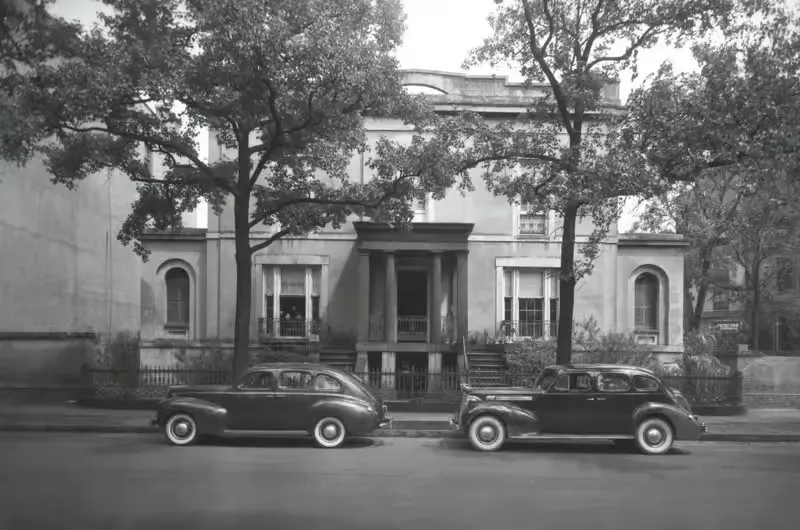
Located in Savannah, Georgia, this magnificent Greek Revival mansion was constructed between 1837 and 1841 by Irish architect Charles B. Cluskey for shipping merchant Francis Sorrel. Today, it attracts thousands of visitors annually through both architectural tours and ghost investigations, making it a focal point for understanding how historical trauma, slavery, and the supernatural intersect in American memory.
The Architecture of Ambition
Before exploring the tragedy that made the Sorrel-Weed House famous for the paranormal, it’s worth understanding what made it architecturally significant in the first place.
The mansion spans 16,000 square feet across multiple floors and represents a pinnacle of neoclassical design in the antebellum South. The $12,000 construction cost (equivalent to roughly $400,000 in today’s dollars) reflected Francis Sorrel’s wealth and status as one of Savannah’s most prominent merchants.
Architectural highlights include:
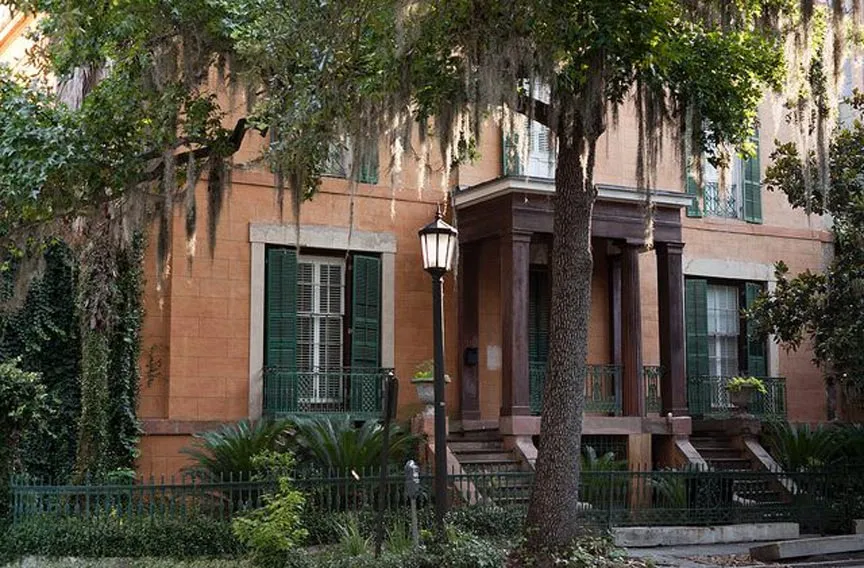
- Four symmetrically arranged porches projecting from all sides
- A raised basement serving as the foundation
- A dramatic curved staircase anchoring the first-floor central hall
- Original exterior finished in striking bright orange stucco (a bold chromatic statement for the era)
- Mediterranean villa influences filtered through Greek Revival design principles
In 1954, the Sorrel-Weed House became one of Georgia’s first two designated State Landmarks, cementing its recognition as a key exemplar of early-19th-century American neoclassical architecture. Architect Cluskey’s influence extended beyond this single property—he designed additional Greek Revival townhouses at 14 and 18 West Harris Street, creating a coherent architectural precinct in Savannah’s historic district.
The Man Who Built It: Francis Sorrel’s Hidden Past
Francis Sorrel’s story began in tragedy and was built on exploitation. Born in Saint-Domingue (modern-day Haiti) in 1793, Sorrel was the son of a French Navy colonel and a woman of mixed race. When the Haitian Revolution erupted in 1791, his father abandoned the family, leaving young Francis to be raised by his mother’s relatives.
This early trauma—abandonment, fear of exposure, the need for concealment—would echo throughout Sorrel’s life. By the early 1800s, he had migrated to Savannah and established himself as a shipping merchant. His fortune rose with the city’s cotton boom. By the mid-19th century, cotton accounted for 80% of Savannah’s agricultural exports, and Sorrel capitalized on every aspect of this economy: importing and exporting commodities, dealing in enslaved persons, and accumulating extraordinary wealth.
The number of enslaved people in the region had grown from roughly 5,847 in 1790 to over 13,000 by century’s end—exceeding the white population. As one historian noted, “by the end of the 1790s, Savannahians had become obsessed with their cotton economy.” Sorrel’s fortune rose and fell with the value of enslaved human beings.
The Dual Tragedy of 1860
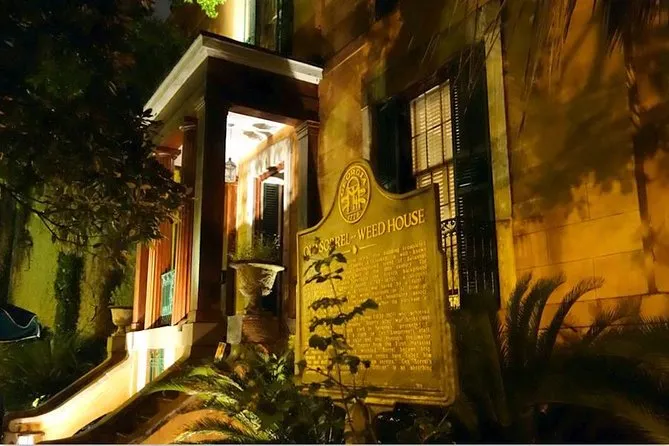
The paranormal reputation of the Sorrel-Weed House rests on two documented tragedies that occurred around 1860, both rooted in sexual exploitation and vulnerability.
Matilda’s Suicide
Francis Sorrel married Lucinda in his younger years, but she died of yellow fever in 1827. Two years later, he married Matilda, Lucinda’s younger sister—a marriage pattern not uncommon in the antebellum South, where high mortality rates made such unions pragmatically attractive.
Matilda’s life within the mansion proved anything but contented. Historical accounts and family letters suggest she suffered from depression, a condition poorly understood and untreated in the 1850s. The psychological literature of the era diagnosed such afflictions as “hysteria” or “melancholia,” attributing them to moral weakness or female pathology.
Around 1860, Matilda discovered her husband engaged in a sexual act with Molly, an enslaved woman whom Francis had installed in separate quarters in the carriage house. The discovery catalyzed a psychological crisis.
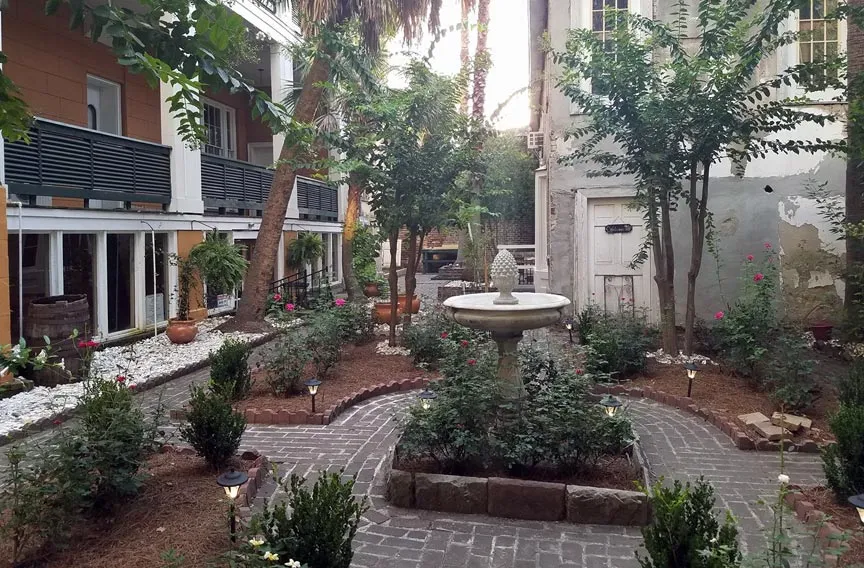
According to the most detailed historical accounts, Matilda fled the carriage house in despair and ran to the main residence. She ascended to the second or third-floor balcony and, in an act of final desperation, threw herself from the railing. She fell to the stone courtyard below, landing headfirst. The impact fractured her skull, and she died from the injuries.
This suicide carried profound social and religious stigma in 19th-century America. It was simultaneously a taboo subject and an inescapable sign of desperation. The official recording of such deaths required careful negotiation between family shame and public record.
The Death of Molly
The circumstances surrounding Molly’s death remain shrouded in ambiguity, though one fact is certain: she died by hanging, likely within weeks of Matilda’s suicide.
An 1857 ship manifest lists “Molly, female, 26,” being transported to New York, presumably for sale or hire. No record documents her return to Savannah, yet oral tradition asserts that she remained on the Sorrel property and met her end in the carriage house.
Accounts of her death diverge on a crucial question: Was it suicide or murder?
- The official narrative: Suicide, a designation that paradoxically carried less legal and moral complexity than a murder charge
- Historical whispers: “Masked men” arrived at the property days after Matilda’s death and hanged Molly in an act of vigilante violence, allegedly with Francis Sorrel witnessing or tacitly approving
- Alternative interpretation: Molly, consumed with guilt and anticipating severe punishment, took her own life—a narrative of tragic agency distinct from victimization
The archaeological excavations conducted in 2017 bear directly on this question.
What Archaeology Reveals—and Doesn’t
In February 2017, Armstrong State University conducted a formal archaeological excavation in the carriage house basement under the direction of Professor Laura Seifert. The project was commissioned to investigate a prominent floor depression believed to contain Molly’s remains.
The excavation was methodologically rigorous but limited in scope. A single 1-by-2-meter test unit was excavated, reaching sterile subsoil. The suspected grave, designated Feature 2, was a rectangular pit measuring approximately 80 centimeters deep and 86 centimeters wide.
What the excavation found:
- 1,016 artifacts including kitchen waste, ceramics, metal hardware, coal, and bottle glass
- Faunal remains (bones of pig, cow, and fowl) with butcher marks
- Glass typology indicating a terminus post quem (earliest possible date) of 1880
- No human skeletal remains of any kind
This finding directly contradicted the persistent oral tradition asserting Molly’s burial beneath the carriage house basement floor. The archaeological report classified the Molly narrative as “oral tradition” (information passed down without eyewitness corroboration) rather than “oral history” (accounts from individuals with firsthand knowledge).
The absence of physical evidence doesn’t invalidate the historical reality of Molly’s existence or the tragic circumstances surrounding her death. Rather, it suggests that either she was not buried at that specific location, her remains were disposed of through other means, or the specific legend represents a historical reconstruction rather than a documented fact.
The story, however, encapsulates profound truths about slavery, sexual exploitation, and the vulnerability of enslaved women—even if the specific details remain unverified by material evidence.
The Revolutionary War Layer: Siege of Savannah
The paranormal complexity of the Sorrel-Weed House deepens when considering its location. The property stands atop the site of the Siege of Savannah (1779), one of the most significant and devastating battles of the American Revolutionary War.
The British constructed fortresses on the property, and barracks served as housing for British soldiers. According to documented incident reports, a cannonball crashed directly into the barracks, killing twelve soldiers instantly. The siege resulted in enormous loss of life and represents a pivotal moment in American Revolutionary history.
Contemporary accounts describe the area surrounding Madison Square—where the Sorrel-Weed House is located—as having witnessed the “bloodiest battles” of the Revolutionary War period. The combination of mass death, warfare trauma, and the property’s liminal status between past and present has led paranormal investigators to theorize that many reported phenomena originate not from Matilda and Molly but from the thousands of soldiers who perished on the site.
This layering of trauma—Revolutionary War carnage beneath the foundation, antebellum domestic tragedy within the walls—creates what paranormal researchers describe as “accumulated historical trauma.”
The Paranormal Phenomena: What Visitors Report
The Sorrel-Weed House has been featured on multiple major paranormal investigation television programs, establishing a corpus of documented investigations:
- Ghost Hunters: Featured the property on their paranormal investigation program
- HGTV’s “If Walls Could Talk”: Documented the house’s paranormal reputation
- Ghost Adventures (2014): Zak Bagans, Nick Groff, and Aaron Goodwin conducted a lockdown investigation with professional-grade paranormal documentation
- BuzzFeed Unsolved: Supernatural (Season 2): Ryan Bergara and Shane Madej investigated, returning in 2025 for an extended 24-hour solo investigation
The appearance on Ghost Adventures, one of the most widely distributed paranormal television franchises globally, significantly amplified the Sorrel-Weed House’s reach beyond Savannah’s tourist economy.
Visual Manifestations
Shadow Figures: The most frequently reported visual phenomenon. Dark, indistinct humanoid shapes appear fleetingly in peripheral vision, particularly on stairwells and hallways. These manifestations lack clear facial features and vanish upon direct observation.
Full-Bodied Apparitions: While rarer, multiple witnesses report seeing complete apparitions. The most frequently described is a woman in white, believed to be Matilda Sorrel, observed near the second-floor balcony and in her former bedroom. A male figure in formal dress, sometimes described as wearing a top hat, is also reported—potentially Francis Sorrel himself.
Mirror Reflections: Visitors report observing female apparitions reflected in mirrors without corresponding physical bodies present in the room.
Orbs and Light Anomalies: Photographs frequently capture unexplained spherical light formations. While skeptics attribute these to camera flash reflecting off dust particles, proponents argue certain orbs display characteristics inconsistent with dust reflection.
Auditory Phenomena
Disembodied Voices and EVP: Visitors and investigators frequently report hearing whispers, faint conversations, and disembodied voices. Paranormal investigators use audio recording devices to capture Electronic Voice Phenomena—supposed spirit voices inaudible to the human ear in real-time but allegedly detectable upon playback.
Phantom Social Gatherings: Multiple reports describe sounds of a social gathering—conversations, laughter, clinking glasses—emanating from the living room. The phenomenon consistently ceases when observers approach the space.
Footsteps and Domestic Sounds: Creaking footsteps on stairs and floorboards are reported when the house is unoccupied. Rustling sounds consistent with period-appropriate clothing (women’s skirts) have also been documented.
Gunfire and Warfare Sounds: Particularly on quiet nights, visitors report hearing gunshots, cannon fire, and military conflict, attributed to residual energy from the Siege of Savannah.
Physical Interactions
Tactile Contact: Visitors report feeling unseen hands brush their hair, tug their clothing, or deliver distinct pushes or shoves, particularly on staircases and in narrow hallways.
Choking Sensations: Particularly in the carriage house and slave quarters, visitors report the sensation of being strangled—feeling pressure around the neck or experiencing breathlessness without obvious physical cause. This phenomenon is interpreted as a residual imprinting of Molly’s manner of death.
Object Movement and Electronic Interference: While less frequently reported, some visitors describe observing small objects move of their own accord, doors opening and closing without human agency, and curtains rustling in still air. Paranormal investigators using EMF meters frequently report dramatic spikes without identifiable sources.
Environmental and Sensory Phenomena
Cold Spots: Sudden, localized temperature drops occur in specific areas: the grand staircase, Matilda’s bedroom, and the carriage house. These cold spots are reported by visitors while others in the same space experience normal or warm temperatures.
Olfactory Phenomena: Visitors report unusual smells—old perfume, cigar smoke, or decay—without any discernible source, interpreted as imprints of past occupants’ material habits.
Emotional and Psychic Impressions: Many visitors report overwhelming emotional shifts—profound sadness, despair, anxiety, rage, or inexplicable dread—upon entering particular rooms. The carriage house and Matilda’s bedroom are particularly noted for their oppressive atmospheres.
Drowsiness and Nausea: Specific areas induce drowsiness, nausea, and disorientation in visitors, attributed to either residual trauma energy or electromagnetic effects.
The Skeptical Counter-Arguments
Alternative explanations exist for virtually every reported phenomenon:
Suggestion and Expectation: Visitors arrive primed by media representations and ghost tour marketing to expect and interpret ambiguous sensory experiences as paranormal. This “Haunted House Effect” can generate false memories and misattributions of ordinary phenomena.
Environmental Factors: The age of the building, its wiring, and electromagnetic fields generated by nearby power lines can produce EMF readings, flickering lights, and unexplained sounds. Structural settling and acoustic properties of old buildings account for creaks and groans.
Pareidolia and Misidentification: The human brain is predisposed to recognize meaningful patterns—particularly faces and figures—in ambiguous visual stimuli. Shadows, reflections, and photographic artifacts can be interpreted as apparitions through this cognitive bias.
Equipment Artifacts: Orbs in photographs are understood by skeptics as reflections of camera flash off dust particles or moisture in air, a phenomenon well-documented in photography. EVP recordings may capture radio interference or environmental sounds misinterpreted as voices.
Inconsistency and Variability: Phenomena reported are inconsistent—some visitors experience apparitions while others report nothing; EMF spikes occur unpredictably; cold spots appear in different locations on different visits. This variability is theoretically inconsistent with a consistent haunting.
However, paranormal investigators counter by emphasizing the consistency of reports across independent visitor groups and time periods, the concentration of phenomena in specific locations, and the documentation of EVP recordings with intelligible speech.
From Private Residence to Paranormal Tourist Destination
The Sorrel-Weed House’s transformation from private residence to paranormal tourist attraction occurred gradually. The Historic Savannah Foundation opened the house for public exhibition in 1940, marking its transition from private property to cultural resource. The house’s reopening in 2005 with dedicated ghost tours capitalized on the growing dark tourism market.
Today, current operations include:
- Daytime Historic Savannah Tours emphasizing architecture and documented history
- Evening ghost tours led by guides functioning as storytellers and paranormal educators
- Paranormal investigation experiences
- Lock-in events (overnight investigations)
- Filmed paranormal investigations coordinated with professional investigators
The house occupies a unique position in Savannah’s tourist economy. While the city maintains numerous historic homes and Revolutionary War sites, the Sorrel-Weed House is distinguished by its paranormal reputation, intensive media documentation, and the emotional intensity of its tragic narrative. Tour operators charge premium prices for evening ghost tours and investigation experiences, making the paranormal reputation economically valuable.
This economic incentive creates potential conflicts of interest: the house’s profitability depends on sustaining paranormal claims, which may influence how phenomena are interpreted or presented to visitors.
The Broader Historical Context
The Sorrel-Weed House illuminates deeper historical patterns often obscured by euphemistic language. Matilda’s suicide reflects the psychological toll of domestic entrapment, sexual betrayal, and the absence of institutional support for women’s mental health in the 19th century.
Molly’s documented existence—confirmed by the 1857 ship manifest and historical accounts—and her presumed death illustrate the particular vulnerability of enslaved women to sexual coercion, the absence of legal recourse or social protection, and the possibilities for both resistance and tragedy within systems designed to render persons as property.
The broader context of Savannah’s antebellum economy reveals a more nuanced picture of slavery than plantation-based narratives often convey. Urban enslaved persons in Savannah, particularly those engaged in skilled trades or market work, enjoyed greater autonomy and better material conditions than plantation slaves, though they remained subject to legal restrictions, coercive control, and vulnerability to sale and family separation.
Francis Sorrel, as a shipping merchant enriched by the slave trade and enslaved labor, embodied the intersection of commercial capitalism and slavery. His wealth enabled the construction of the Sorrel-Weed House; it depended entirely on the exploitation and commodification of enslaved persons.
Comparing America’s Most Documented Hauntings
The Sorrel-Weed House stands among America’s most investigated paranormal properties. How does it compare to other famous haunted locations?
Like The Stanley Hotel, the Sorrel-Weed House combines documented history with sustained paranormal reports. Both properties have been featured on major television paranormal investigation programs, though the Stanley’s inspiration for Stephen King’s “The Shining” gave it literary prominence the Sorrel-Weed House lacks.
The Biltmore Miami Hotel shares the Sorrel-Weed House’s architectural significance and its appeal to both historical and paranormal tourism. Both represent wealth and status from their respective eras.
The Lizzie Borden House similarly combines documented tragedy (a famous murder case) with paranormal claims. Like the Sorrel-Weed House, it functions as both a historical landmark and a paranormal tourist destination.
Eastern State Penitentiary shares the Sorrel-Weed House’s location atop sites of documented mass death and trauma, with visitors reporting similar phenomena including disembodied voices and apparitions of deceased persons.
Even Miami City Cemetery attracts paranormal tourists seeking to encounter historical trauma made tangible through reported spectral activity.
What distinguishes the Sorrel-Weed House is the convergence of three distinct layers of documented tragedy: Revolutionary War carnage, antebellum domestic violence and suicide, and the sexual exploitation of enslaved women. This layering creates what paranormal researchers describe as exceptional density of historical trauma.
The Psychology of Haunting Belief
The persistence of haunting narratives at the Sorrel-Weed House, despite the absence of scientific evidence for paranormal phenomena, suggests that belief in hauntings serves psychological and social functions beyond literal truth claims.
Haunting narratives can function as containers for historical trauma, permitting contemporary persons to acknowledge historical violence and suffering in an emotionally accessible form. The experience of a cold spot, a shadow figure, or a phantom sound can instantiate the presence of historical trauma in the visceral, bodily register—transforming abstract historical facts into emotional and sensory experience.
Moreover, the Sorrel-Weed House haunting narrative, rooted in documented sexual exploitation and gender violence, touches on contemporary anxieties about power, violation, and historical accountability. The appearance of Matilda’s ghost articulates, in spectral form, the psychological catastrophe of betrayal. The hanging of Molly materializes, in paranormal terms, the precariousness and vulnerability of enslaved women’s lives.
The Question of Historical Accountability
The Sorrel-Weed House raises pointed questions about how contemporary societies address historical injustice and trauma embedded in physical space. Should the house be preserved as a monument to architectural achievement, despite its construction by a man enriched through slavery? How should interpretation address documented sexual exploitation within its walls? Can paranormal tourism serve as a vehicle for historical education, or does it trivialize documented violence?
These questions have no simple answers. The house itself is innocent of injustices committed within it; yet the building embodies and perpetuates the aesthetic and social achievements of its original owner, whose wealth depended on slavery. Contemporary preservation and interpretation require acknowledging both the house’s architectural significance and the moral contamination of its origins.
Preservation and Contemporary Operations
The Historic Savannah Foundation has maintained the Sorrel-Weed House as its flagship preservation project. The foundation’s 1996–1998 reconstruction of the house’s east and north verandahs, conducted under the direction of Hansen Architects, represents a significant investment in maintaining the structure’s architectural integrity.
The house’s 16,000 square feet of interior space presents ongoing conservation challenges. The archaeological work in the carriage house basement was undertaken, in part, to address structural concerns and to recover historical information that might inform future conservation decisions.
FAQs: Sorrel-Weed House
The Sorrel-Weed House has not demonstrated paranormal activity through scientific verification. However, thousands of visitors have reported phenomena including shadow figures, apparitions, disembodied voices, cold spots, and emotional impressions. The house’s documented tragic history—including Matilda’s suicide and the death of enslaved woman Molly—provides historical basis for the paranormal narrative. Whether such experiences reflect genuine paranormal activity or result from expectation, environmental factors, and psychological suggestion remains contested between paranormal investigators and skeptical observers.
The most frequently reported apparition is a woman in white, believed to be Matilda Sorrel, observed near the second-floor balcony and in her former bedroom. This manifestation is associated with Matilda’s suicide in 1860, following her discovery of her husband’s sexual relationship with Molly, an enslaved woman. A male figure in formal dress, potentially Francis Sorrel, is also reported by some visitors
No human skeletal remains were recovered during the 2017 archaeological excavation of the carriage house basement, contradicting the widespread oral tradition asserting Molly’s burial at that specific location. The excavation uncovered kitchen refuse, ceramics, metal hardware, coal, and other domestic debris dating to 1880 or later. The archaeological report classifies the Molly burial narrative as “oral tradition” rather than documented fact, though it does not definitively prove Molly was never buried elsewhere on the property.
Yes. The Sorrel-Weed House operates as a museum with multiple tour options. Daytime Historic Savannah Tours emphasize the building’s architecture and documented history, while evening ghost tours are led by guides offering both storytelling and paranormal education. The house also offers paranormal investigation experiences and overnight lock-in events. Contact the Historic Savannah Foundation or visit official Savannah tourism websites for current hours, admission prices, and booking information.
